ContactBook a call

Industries/ Hospitality

Software that holds up on your busiest night, and helps fill the quiet ones

We build the websites, booking flows, ordering apps, staff tools and forecasts that restaurants, hotels, venues, event and leisure businesses run on. More guests book with you directly, your managers change the menu without calling anyone, and the rota reflects the week you are actually going to have.

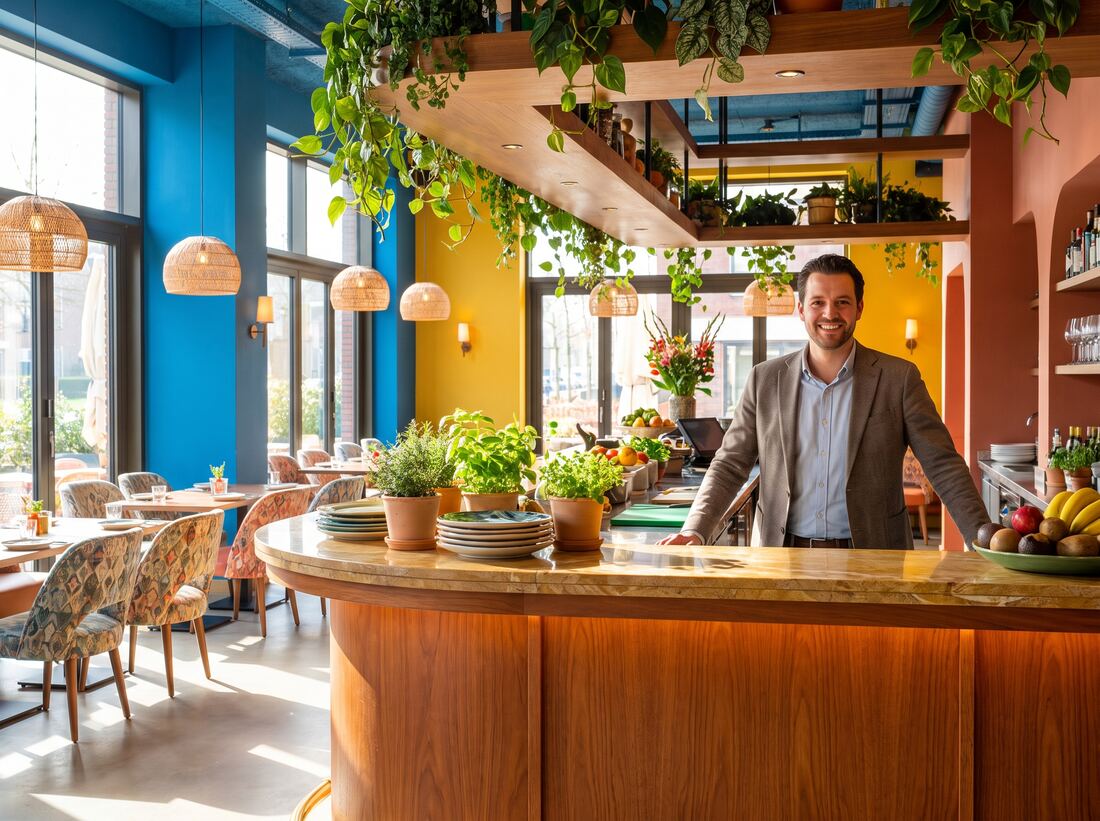
A smiling restaurant owner in a tweed jacket leans on a curved marble-topped bar lined with potted herbs and stacked plates, in a dining room with blue and yellow walls and wicker pendant lamps.

Overview

Hospitality, today

Hospitality runs on thin margins and short notice. A restaurant, hotel, venue or leisure business lives or dies by how full it is, how much each guest spends and how well the team copes when everyone turns up at once. Guests discover you on a phone, judge you on your photographs and expect to book, order or pay in a few taps. Behind the scenes, the reservations system, the till, the rota, the stock sheet and the accounts rarely agree with each other, and the manager on shift is the one holding it all together.

Software fits in two places. Front of house, it is the website, booking flow and ordering app that decide whether a guest books with you directly or through a marketplace that takes a cut and keeps the relationship. Back of house, it is the tools that connect bookings, tills and rotas, so the person writing next week's schedule can see what next week is likely to bring. We work with the reservations, point of sale and property management systems you already use, and build around them rather than asking you to replace them.

Good looks like a website that feels as good as the room does, on a phone at a bus stop. A booking flow that works one-handed and shows the full price before payment. A menu, event or seasonal offer your manager can change on a Saturday night without calling anyone. Rotas planned against a forecast instead of gut feel. Staff who can find the allergen answer or the refund rule mid-service. And a system that stays up when a newsletter goes out, tickets go on sale or the first warm weekend of the year arrives.

The pressures

What you are up against

What owners, general managers and operations leads tell us when we ask what keeps them up after close.

  1. 01

    Marketplaces own our regulars

    Our most loyal guests book or order through platforms that take a commission every time and show them three competitors on the way to us. We do not know who they are, cannot thank them or bring them back ourselves, and the margin we lose on each order adds up over a year.

  2. 02

    Every menu change needs someone

    Menus change with the season, opening hours shift for holidays and the festive offer has to go live on a Tuesday evening. Each of those is an email to a supplier, a wait and an invoice. By the time the site is right, half our guests have already seen the wrong version.

  3. 03

    The rota is a guess

    We write rotas a fortnight ahead on gut feel. Overstaff a quiet week and the margin disappears; understaff a busy one and both the reviews and the team suffer. Nobody can see that the wage bill was wrong until the week has already happened and the money is spent.

  4. 04

    Systems that fall over at peak

    The booking page slows down the moment a newsletter goes out, tickets go on sale or the sun comes out. The reservations system, the till and the website each show different availability, and when something breaks on a Saturday night nobody knows who to call or how long it will take.

What we build

Software for hospitality

Six things restaurants, hotels, venues and event businesses most often ask us to build. Each card links to the service that does the work.

Fast, image-led venue websites

Photographs that load quickly on a phone, with menus, opening hours, events and seasonal offers your own team updates and schedules, and booking buttons that hand guests straight to your reservations system without losing them on the way.

Read more

Booking flows guests finish

A booking journey rebuilt for a thumb: a date picker that works one-handed, fewer steps, real availability, the full price before payment, and a confirmation email that answers the questions guests usually phone up to ask.

Read more

Ordering and loyalty apps

Your own app for ordering, table booking and loyalty, with saved favourites and quick reorder, wired into the till and kitchen system your staff already use, so menus, prices and sold-out items stay in step everywhere.

Read more

Rota and demand forecasting

Covers forecast per site, day and shift from your trading history, seasonality, local events and weather, shown as a range next to the planned rota, so managers can adjust staffing while the rota can still be changed.

Read more

Answers for every shift

Opening checklists, allergen information, refund rules and what to do when the card machine dies, answered on a phone in one short paragraph with the source attached, and safety wording returned exactly as it was written.

Read more

Group and site dashboards

Covers, revenue, spend per head, labour cost, reviews and stock variance by site and by shift, pulled automatically from your till, bookings and rota systems and ready on the manager's phone before the morning briefing.

Read more

What changes

From how it runs now to how it could

How familiar parts of running a hospitality business work today, and how they work once the software is in place.

TodayWith the right software
Regulars order through a marketplace that takes a commission and keeps their details.Regulars reorder in your own app, and both the relationship and the margin stay with you.
Every change to the menu or opening hours is an email to a supplier and a wait.Managers update menus, hours and events themselves and schedule seasonal changes in advance.
Rotas are written a fortnight ahead on gut feel and memories of last year.Rotas are planned against a forecast of covers showing the likely range for each shift.
Guests give up on a phone at the date picker or the payment step.Guests finish booking one-handed, with real availability and the full price shown before they pay.
Staff on a busy floor ring the area manager for answers already written down somewhere.Staff search procedures on a phone and get the official answer, with its source, mid-service.

In practice

What it looks like on the ground

Three worked examples from our service pages: a venue website that finally loads on a phone, a booking flow that stopped losing guests at the same step every day, and rotas planned for the Saturday nobody predicted.

01 · Hospitality & venues

Photographs that load before the visitor gives up

The problem
Restaurants, hotels and venues sell on imagery, and imagery is exactly what makes a site crawl on a phone. Menus go out of date within a fortnight, and every seasonal change means asking an agency and waiting.
What we build
Image-heavy pages with automatic format conversion and per-screen resizing, plus menus, opening hours and events managed by the venue's own team, with scheduled publishing for seasonal changes.
What changes
A site that feels as good as the room does, on a phone at a bus stop, and a manager who can change Sunday's menu on Saturday night.

More on company websites
Hospitality & bookings

02 · Hospitality & bookings

A booking flow leaking customers on a phone

The problem
Most visitors arrive on a phone and the booking journey was designed for a desktop. The date picker fights with thumbs, the payment step reloads and loses the selection, and drop-off spikes at the same step every single day.
What we build
Session recordings to pinpoint exactly where people leave, then a mobile-first rebuild of the booking flow: a date picker that works with one thumb, fewer steps, progress saved between visits, and the full price shown before the payment screen rather than after it.
What changes
More bookings completed on the device most people are actually using, and a reception desk fielding fewer rescue phone calls.
More on design refresh
Hospitality & events

03 · Hospitality & events

Rostering for a Saturday nobody predicted

The problem
Staff rotas are set a fortnight ahead on gut feel. Overstaffing quietly destroys margin on a quiet week; understaffing produces bad reviews and burnt-out staff on a busy one, and neither is spotted until the wage cost lands.
What we build
Covers forecast per site, per day and per shift from trading history, seasonality, local events and weather, presented as a range next to the planned rota so the gap is visible while the rota can still be changed.
What changes
Labour cost as a share of revenue held closer to target across every site, with the reasoning visible to managers so they can override the forecast when they know something it does not.
More on forecasting & alerts

Handled with care

The details that matter here

Hospitality software takes guests' money, holds their details and has to work on the busiest night of the year. These are the things we handle with particular care.

  • Payments and card data

    Deposits, prepayments, gift vouchers and no-show charges all touch card payments. We use established payment providers, so card details are handled by them rather than stored on your systems, design refunds and partial charges carefully, and make sure the till, bookings and accounts tell the same story at the end of the night.

  • Peak booking and ticket load

    A newsletter, a sell-out event, a holiday weekend or a mention on social media can bring everyone at once. We plan for those spikes, test the busiest journeys under load before they arrive, guard against double bookings and agree in advance what happens, and who is called, if something fails mid-service.

  • Allergens and safety information

    Allergen and dietary information has to be right every time: on the menu, the website, the ordering app and in the answer a new starter gets on shift. We keep it in one place, publish it everywhere from that single source and return safety wording exactly as written, never as a summary.

  • Guest data and accessibility

    Booking histories, preferences, dietary notes and marketing consents are personal data under GDPR and similar laws. We collect what you genuinely use and keep consent records straight. We also make booking and ordering work with screen readers, keyboards and larger text, because guests with access needs often check the website before anything else.

Good first projects

Where to start

Three contained first projects. Each is useful on its own and small enough that you can judge the result quickly.

Guides

Worth reading first

Questions

What hospitality teams ask us

Will this replace our booking system or till?

Rarely. Your reservations platform, point of sale and property management system usually do their core job well, and your staff know them. What we build sits around them: a faster website, a better booking flow on top of your reservations engine, an ordering app wired to your till, a forecast fed by your trading history. Where an existing system cannot be connected to, we will say so early and explain the realistic options, which sometimes includes living with it for now.

Should we just use an off-the-shelf booking or ordering product?

For many single-site restaurants and small venues, yes. A mainstream reservations or online ordering product, set up well, will serve you better than anything custom, and we will tell you so rather than sell you a build. Custom work makes sense when you run several sites, combine rooms, tables, events and experiences in ways those products cannot handle, or when marketplace commissions at your volume outweigh the cost of owning the channel yourself.

Can our own app really win orders back from delivery marketplaces?

It can win back your regulars, which is where most of the value sits. Guests who already like you will happily reorder directly if the app is quick and rewards them for it. It will not replace the discovery a marketplace gives you with new customers, so most operators keep both and steer repeat guests towards their own channel. We will not promise a number, but we will set up the measurement so you can see the split for yourself.

What happens if it goes down on a Saturday night?

We plan for that conversation before launch, not during it. Monitoring watches the booking and ordering journeys around the clock, backups are tested by actually restoring them, and there is a written plan for who is called and what guests see if something fails mid-service. Nobody honest can promise it will never happen. What we can do is make sure you know how recovery works, and that it has been rehearsed rather than assumed.

Can our managers update the website themselves?

Yes, and we test it at handover by having them do it while we watch. Menus, prices, opening hours, events, seasonal offers and photographs are all edited by your own team, with previews and scheduled publishing, so the festive menu goes live at the right moment without anyone staying late. A genuinely new kind of page or feature still needs some development work, which is exactly what an ongoing care plan is for.

Tell us what really happens on a fully booked night

Book a free first call. Walk us through a busy service, a sell-out event or a booking that went wrong, and we will tell you honestly where software would help first.